


The Smart Home Scenes You Won’t Want to Live Without Once You’ve Tried Them
What makes a smart home truly change the way you live? It’s not necessarily the most sophisticated feature or the most impressive technology. More often, it’s the small moments that happen every single day: leaving the house, coming home, transitioning from day to night, or preparing for the weekend. A smart home system can offer a wide range of scenes tailored to the residents’ habits, needs, and lifestyle. But which ones actually become an indispensable part of everyday life?
We asked architects and interior designers who have worked with Vitrea systems which scenes, in their experience, make the biggest difference in their clients’ quality of life. Their answers reveal something interesting about the way truly smart technology integrates into a home.
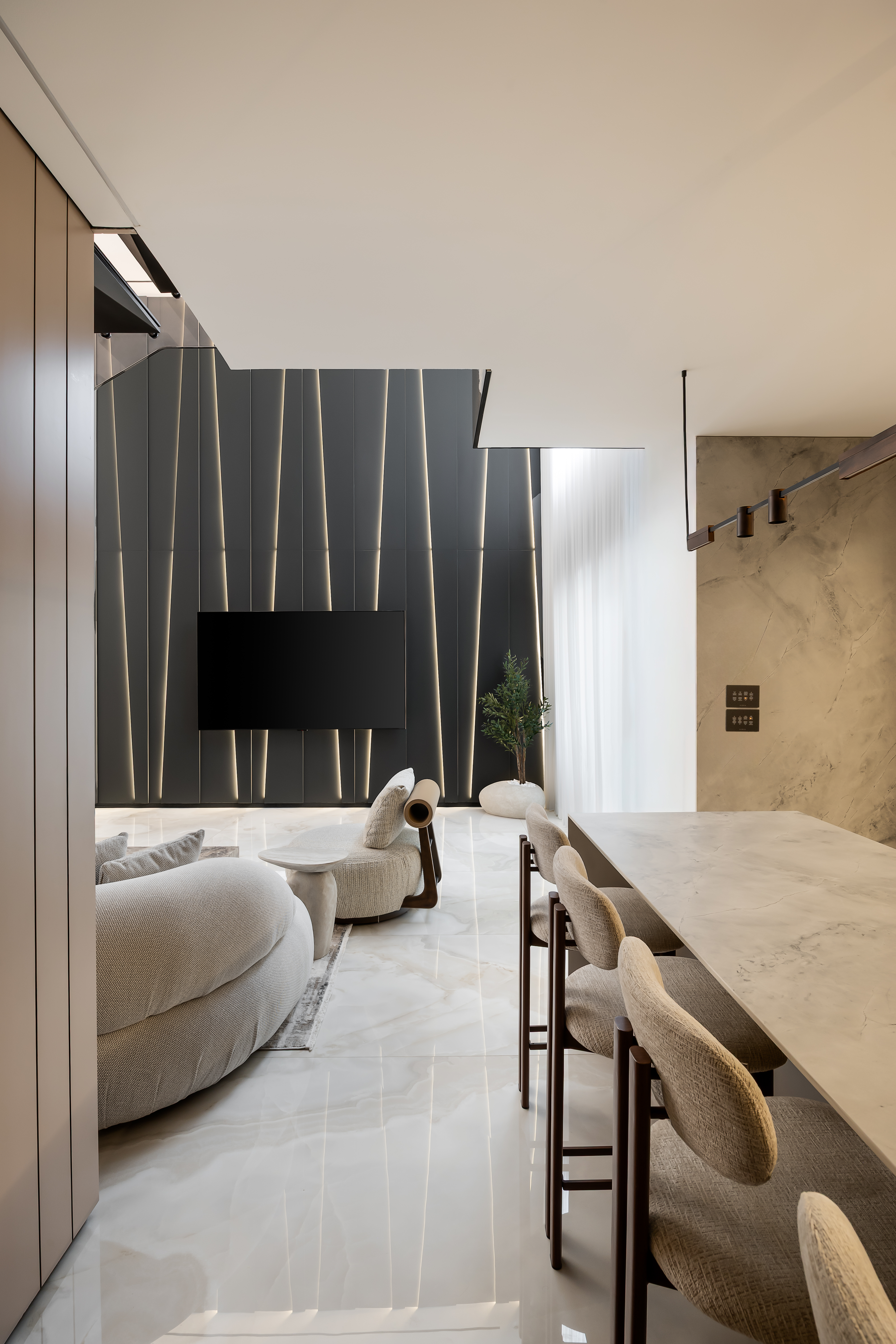
Interior Design: Yifat Mantash | Photography: Avi Kablo | Smart Home System: Vitrea
Leaving Home. With One Touch.
One of the scenes that came up again and again was actually one of the simplest: the “Away” or “All Off” scene.
Instead of walking from room to room checking the lights, HVAC, shades, and other systems, one command can trigger an entire sequence of actions that has been predefined according to the home and the family’s needs.
As interior designer Moran Gozali explains:
“For both my clients and myself as a designer, the most useful scene in a family home is without a doubt the ‘Away’ scene, which turns off all the home’s systems: lighting, water heater, HVAC, and shades. Instead of going from button to button and switch to switch, with one touch the smart home takes care of everything, giving you the peace of mind to leave knowing that no system has been left on.”
Designer Benjamin Atali also chose the Away scene, but in his project, one small customization makes a significant difference in everyday life:
“The Away scene we created essentially turns off the entire home but leaves the light by the door on for exactly as long as you need to leave the house. It then turns off automatically. It’s very useful and energy-efficient as well.”
These examples illustrate one of the key advantages of a smart home: not simply the ability to control different systems from one place, but the ability to connect them and determine in advance how the home should respond to recurring everyday situations.
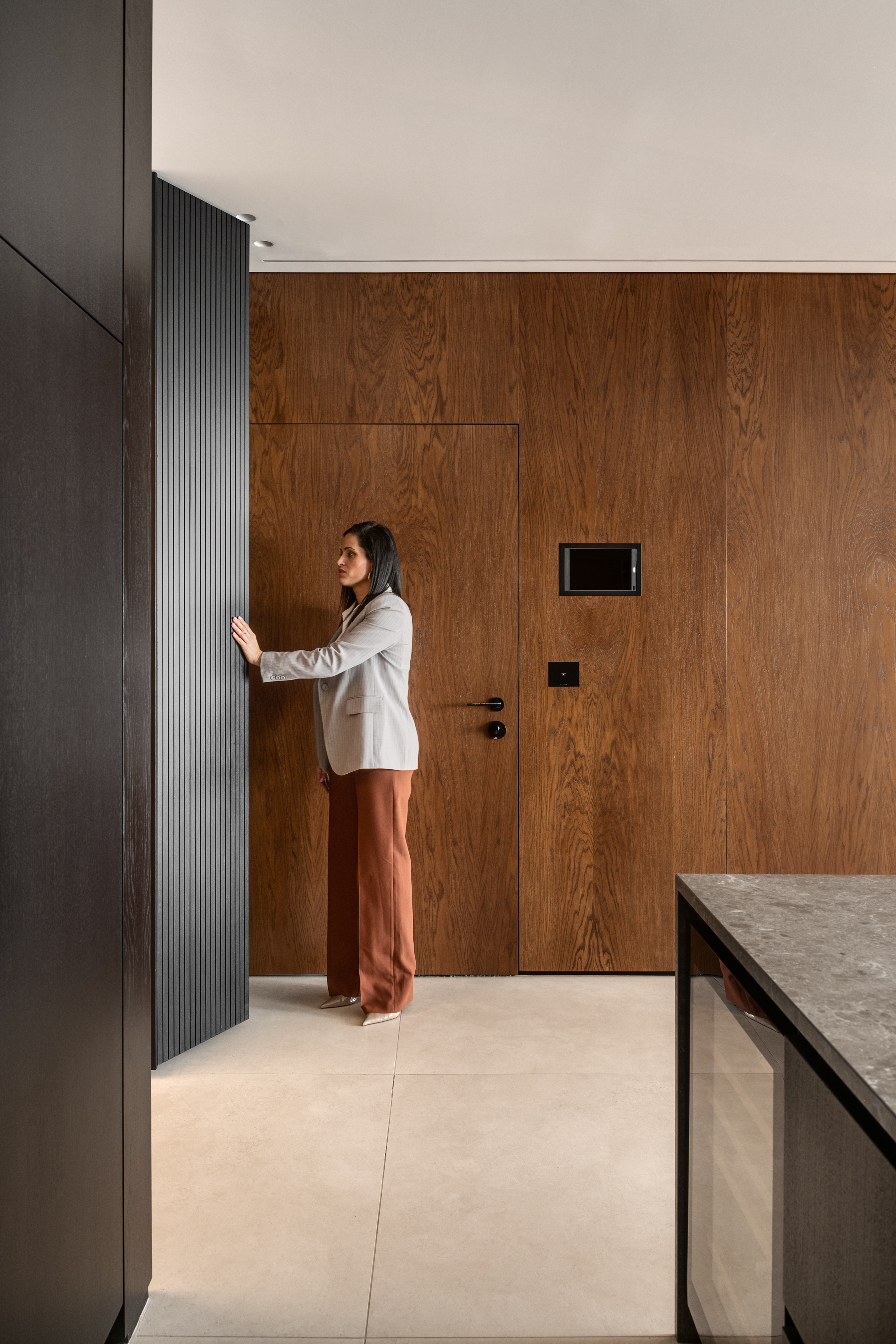
Interior Design: Yifat Mantash | Photography: Oded Smadar | Smart Home System: Vitrea
And What Happens When You Come Home?
If the Away scene shuts the home down, the Welcome Home scene does just the opposite: it prepares the home for your arrival.
Interior designer Pninit Sharet Azulay explains that in one of her projects, an “All Off” scene was programmed to turn off the lighting, shades, curtains, ovens, HVAC, radiant floor heating, and more with one touch, while simultaneously activating the security system.
But there’s another scene she personally loves:
“Another scene I personally really love is ‘WELCOME HOME,’ which turns on pleasant – and functional – lighting when you enter the home, according to specific lighting circuits we predefined.”
This is exactly where thoughtful smart home planning meets interior design. Rather than simply “turning on the lights,” the system can be programmed to determine which lights come on, in which areas, and in which situation to create the right atmosphere while remaining functional.
When Your Home Knows It’s Day or Night
The transition between different times of day is something we barely think about, even though it often involves a series of small actions throughout the home.
Architect and interior designer Nirit Frenkel chose Day and Night scenes:
“Day and Night scenes allow us to control the shading, HVAC, and lighting systems simultaneously and with one touch, instead of walking around the house going from switch to switch to turn everything on or off.”
A single scene can bring several different systems together and adapt the living environment to the time of day and the way each space is being used. Instead of deciding each time what needs to be turned on, turned off, opened, or closed, the home can carry out the predefined sequence automatically.
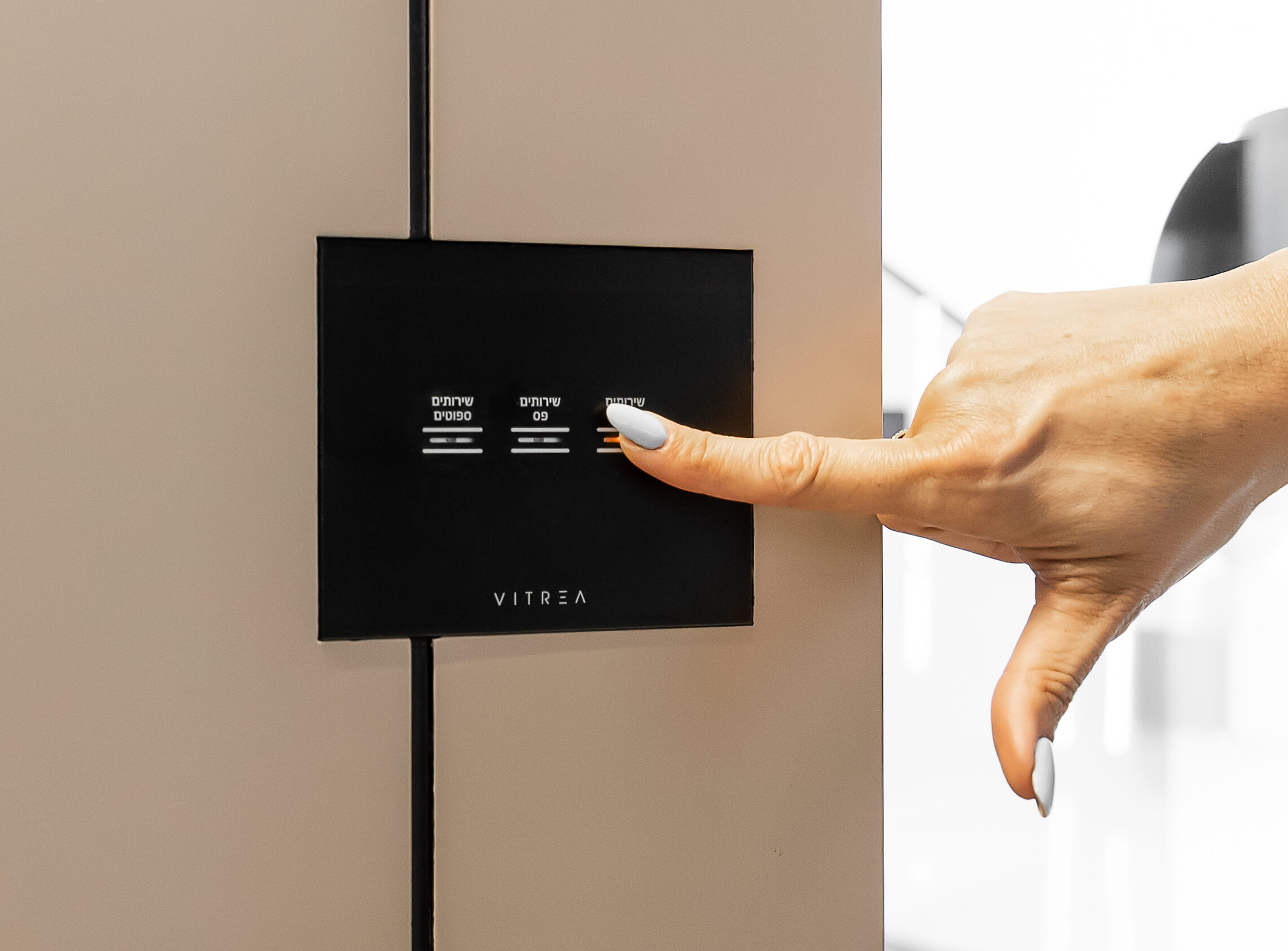
Interior Design: Yifat Mantash | Photography: Avi Kablo | Smart Home System: Vitrea
In Some Homes, Lifestyle Defines the Scene
One of the major advantages of smart home planning is that there is no single scene that works for everyone. The same system can function very differently depending on the people who live in the home.
In a project designed by Kfir Galatia Azulay, for example, the family’s traditional religious lifestyle played an integral role in planning the system:
“We created many scenes for the project, including All Off, Entertaining, and a ‘Movie’ scene that transforms the atmosphere of the space with one touch. But if I had to choose the one that most improves the residents’ quality of life, it would be the scene related to the Shabbat timer functions. Because the family follows a traditional religious lifestyle, the requirement was to create a ‘Shabbat-ready home,’ where all systems operate automatically on Shabbat and holidays without any intervention. Since Vitrea’s system also includes an astronomical clock, the ‘Shabbat’ scene is synchronized with the changing start and end times of Shabbat.”
This demonstrates just how personal a smart home can be. The technology doesn’t dictate how residents should live; instead, it is designed around the way they live.
Sometimes, You Don’t Even Need to Touch a Button
Perhaps the next level of convenience is when even pressing a button becomes unnecessary.
Interior designer Nicole Weinberg points to lighting automation as one of the most useful tools in a smart home – from lights that gradually brighten in the morning to simulate sunrise, to motion sensors that automatically turn lights on when someone enters a room and off when they leave, and even a Vacation scene that simulates occupancy through changing lighting patterns.
As she explains:
“It can not only make the home more energy-efficient, but also improve comfort and safety.”
This adds another layer to smart home planning: moving beyond centralized control and the ability to activate multiple systems with one touch, toward automations that allow the home to respond naturally to predefined situations.
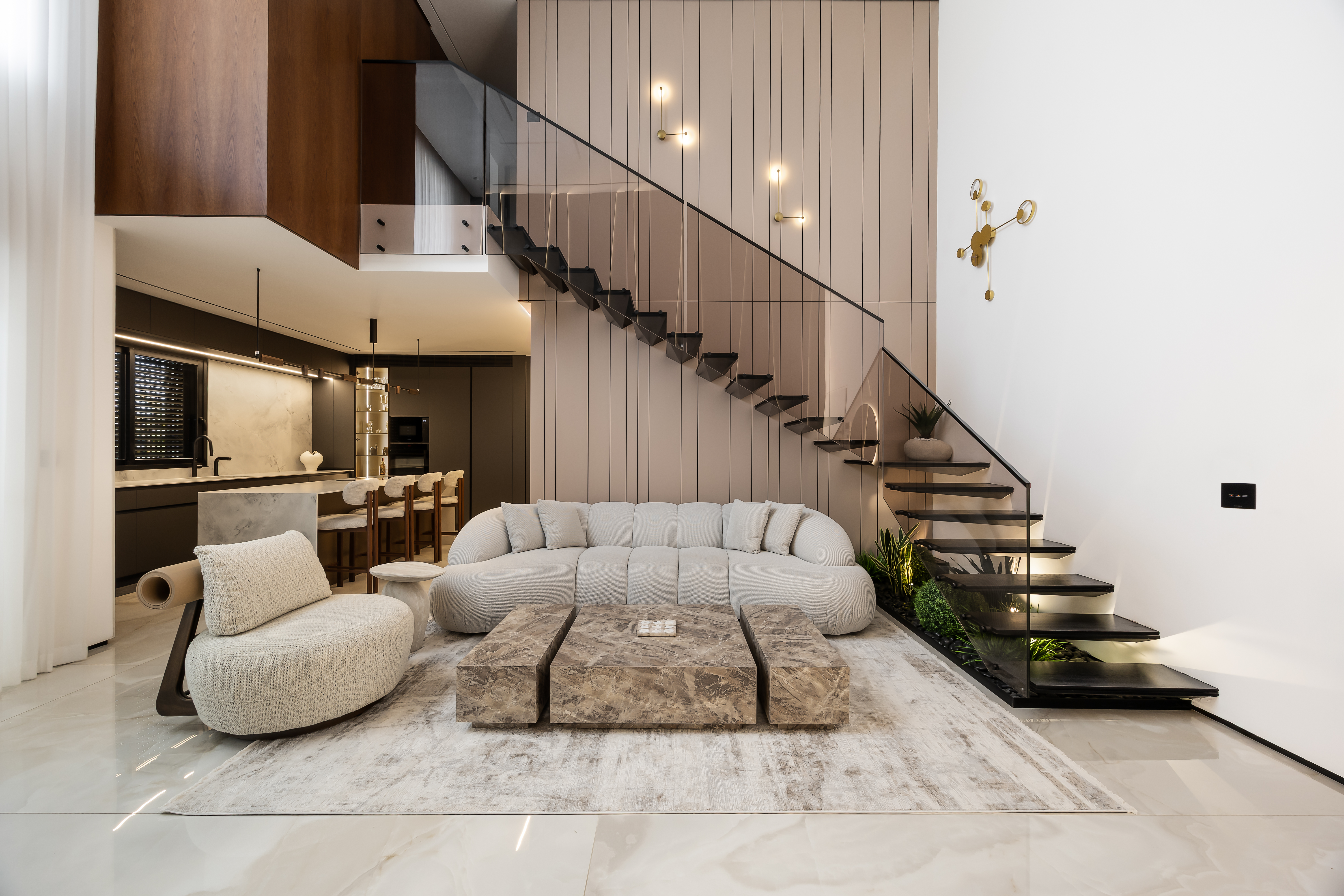
Interior Design: Yifat Mantash | Photography: Avi Kablo | Smart Home System: Vitrea
The Best Scene? The One That Fits Your Life.
If there’s one thing all these answers make clear, it’s that there really is no single “winning” scene.
For one family, it’s being able to leave the house with one touch and know that everything has been turned off. For another, it’s having the home operate automatically throughout Shabbat. In one home, the lighting that welcomes residents when they walk through the door makes all the difference; in another, it’s the Day and Night scenes.
And that’s also the principle behind Vitrea smart home systems: technology should adapt to the home, its design, and the people who live in it – not the other way around. With a wide range of solutions, integrations, scenes, and automations, each system can be planned around the unique needs of the project while maintaining a clean design language that integrates seamlessly into the space.
With Vitrea smart home systems, you can control every area of your home easily and conveniently. Create scenes tailored to your lifestyle, make everyday living more comfortable and smarter than ever, and simply let your home work for you automatically.
Now is the perfect time to upgrade to a Vitrea smart home. For more information and to schedule a meeting at our showroom, leave your details here.